

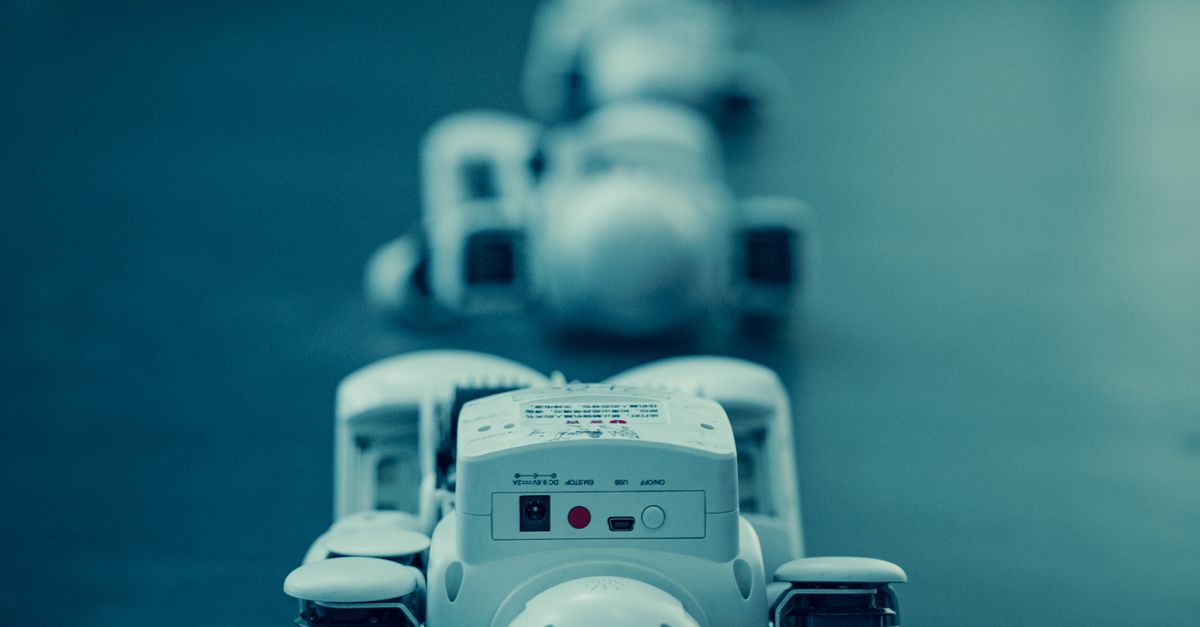

Vision-language-action models, often abbreviated as VLA models, are artificial intelligence systems that integrate three core capabilities: visual perception, natural language understanding, and physical action. Unlike traditional robotic controllers that rely on preprogrammed rules or narrow sensory inputs, VLA models interpret what they see, understand what they are told, and decide how to act in real time. This tri-modal integration allows robots to operate in open-ended, human-centered environments where uncertainty and variability are the norm.
At a high level, these models connect camera inputs to semantic understanding and motor outputs. A robot can observe a cluttered table, comprehend a spoken instruction such as pick up the red mug next to the laptop, and execute the task even if it has never encountered that exact scene before.
Why Traditional Robotic Systems Fall Short
Conventional robots perform remarkably well in tightly controlled settings such as factories, where lighting, object placement, and daily tasks remain largely consistent, yet they falter in environments like homes, hospitals, warehouses, and public areas. Their shortcomings often arise from compartmentalized subsystems: vision components tasked with spotting objects, language modules that interpret instructions, and control units that direct actuators, all operating with only a limited shared grasp of the surroundings.
Such fragmentation results in several issues:
- Significant engineering expenses required to account for every conceivable scenario.
- Weak transfer when encountering unfamiliar objects or spatial arrangements.
- Reduced capacity to grasp unclear or partially specified instructions.
- Unstable performance whenever the surroundings shift.
VLA models resolve these challenges by acquiring shared representations across perception, language, and action, allowing robots to adjust dynamically instead of depending on inflexible scripts.
The Role of Vision in Grounding Reality
Vision provides robots with situational awareness. Modern VLA models use large-scale visual encoders trained on billions of images and videos. This allows robots to recognize objects, estimate spatial relationships, and understand scenes at a semantic level.
For example, a service robot in a hospital can visually distinguish between medical equipment, patients, and staff uniforms. Instead of merely detecting shapes, it understands context: which items are movable, which areas are restricted, and which objects are relevant to a given task. This grounding in visual reality is essential for safe and effective operation.
Language as a Flexible Interface
Language transforms how humans interact with robots. Rather than relying on specialized programming or control panels, people can use natural instructions. VLA models link words and phrases directly to visual concepts and motor behaviors.
This provides multiple benefits:
- Non-expert users can instruct robots without training.
- Commands can be abstract, high-level, or conditional.
- Robots can ask clarifying questions when instructions are ambiguous.
For instance, in a warehouse setting, a supervisor can say, reorganize the shelves so heavy items are on the bottom. The robot interprets this goal, visually assesses shelf contents, and plans a sequence of actions without explicit step-by-step guidance.
Action: From Understanding to Execution
The action component is the stage where intelligence takes on a practical form, with VLA models translating observed conditions and verbal objectives into motor directives like grasping, moving through environments, or handling tools, and these actions are not fixed in advance but are instead continually refined in response to ongoing visual input.
This feedback loop enables robots to bounce back from mistakes, as they can tighten their hold when an item starts to slip and redirect their movement whenever an obstacle emerges. Research in robotics indicates that systems built with integrated perception‑action models boost task completion rates by more than 30 percent compared to modular pipelines operating in unpredictable settings.
Learning from Large-Scale, Multimodal Data
A key factor driving the rapid evolution of VLA models is their access to broad and diverse datasets that merge images, videos, text, and practical demonstrations. Robots are able to learn through:
- Human demonstrations captured on video.
- Simulated environments with millions of task variations.
- Paired visual and textual data describing actions.
This data-driven approach allows next-gen robots to generalize skills. A robot trained to open doors in simulation can transfer that knowledge to different door types in the real world, even if the handles and surroundings vary significantly.
Real-World Use Cases Emerging Today
VLA models are already influencing real-world applications, as robots in logistics now use them to manage mixed-item picking by recognizing products through their visual features and textual labels, while domestic robotics prototypes can respond to spoken instructions for household tasks, cleaning designated spots or retrieving items for elderly users.
In industrial inspection, mobile robots apply vision systems to spot irregularities, rely on language understanding to clarify inspection objectives, and carry out precise movements to align sensors correctly, while early implementations indicate that manual inspection efforts can drop by as much as 40 percent, revealing clear economic benefits.
Safety, Adaptability, and Human Alignment
Another critical advantage of vision-language-action models is improved safety and alignment with human intent. Because robots understand both what they see and what humans mean, they are less likely to perform harmful or unintended actions.
For instance, when a person says do not touch that while gesturing toward an item, the robot can connect the visual cue with the verbal restriction and adapt its actions accordingly. Such grounded comprehension is crucial for robots that operate alongside humans in shared environments.
How VLA Models Lay the Groundwork for the Robotics of Tomorrow
Next-gen robots are anticipated to evolve into versatile assistants instead of narrowly focused machines, supported by vision-language-action models that form the cognitive core of this transformation, enabling continuous learning, natural communication, and reliable performance in real-world environments.
The importance of these models extends far beyond raw technical metrics, as they are redefining the way humans work alongside machines, reducing obstacles to adoption and broadening the spectrum of tasks robots are able to handle. As perception, language, and action become more tightly integrated, robots are steadily approaching the role of general-purpose collaborators capable of interpreting our surroundings, our speech, and our intentions within a unified, coherent form of intelligence.


