

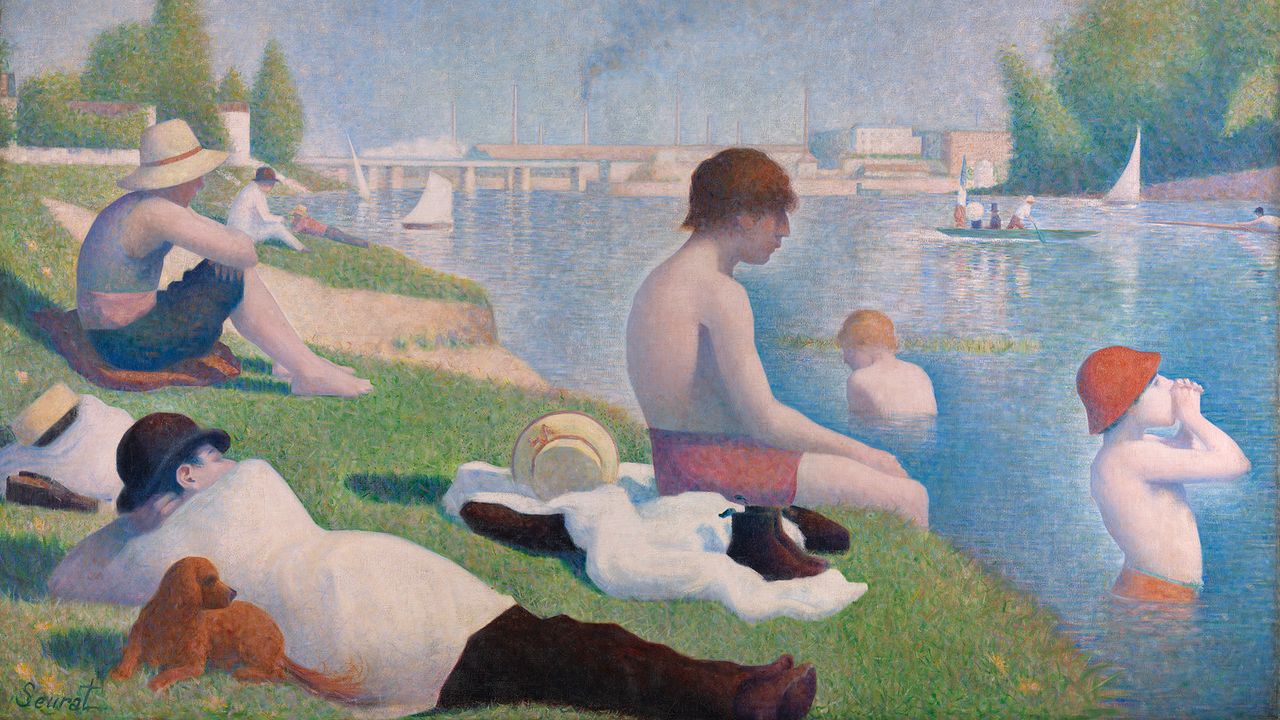

Georges Seurat’s renowned 1884 artwork, A Sunday on La Grande Jatte, goes beyond a simple depiction of people in Paris spending leisurely time by the water. Beneath its peaceful appearance and carefully placed dots of paint, it embodies a daring declaration about creativity, culture, and the progression of painting. This pioneering piece, produced using Seurat’s distinctive pointillism method, was an intentional break from the impulsive nature of Impressionism. It served as a thoughtful artistic and cultural evaluation, challenging the conventional art scene and offering insights into the vibrant intellectual climate of late 19th-century France. The continuing significance of the painting is found in its intricate layers of interpretation, which remain as significant and engaging now as they were more than a hundred years ago.
Seurat’s masterpiece was a product of his fascination with scientific theories of color and perception. He developed a technique known as chromoluminarism, or pointillism, where he applied small, distinct dots of pure color to the canvas. From a distance, these dots would blend in the viewer’s eye, creating a luminous and vibrant effect. This method was a radical break from the traditional brushstrokes of the time and was seen as a deliberate, scientific approach to art. It was a rejection of the emotional, fleeting moments captured by the Impressionists and an embrace of a more structured, cerebral form of expression. Seurat was not just painting a scene; he was conducting an optical experiment on a grand scale.
Beyond its technical innovation, A Sunday on La Grande Jatte is a powerful social commentary. The painting depicts people from all walks of life—bourgeois couples, working-class families, soldiers, and artists—all gathered in a public park. Yet, despite their physical proximity, there is a pervasive sense of isolation and detachment. The figures are stiff and stylized, frozen in time, their gazes rarely meeting. This lack of connection is often interpreted as a critique of modern urban life and the alienation that comes with it. Seurat was capturing the new social dynamics of Paris, a city undergoing rapid industrialization and social change, where people existed in a state of isolated proximity. The painting is a silent indictment of a society where individuals are physically present but emotionally absent.
The radical nature of the painting extends to its scale and subject matter. At over ten feet wide, the canvas is monumental, a size typically reserved for grand historical or religious scenes. By applying this grand scale to a mundane, contemporary subject—people relaxing in a park—Seurat was making a powerful statement about the importance of modern life as a subject for serious art. He elevated the everyday to the level of the epic, arguing that the experiences of ordinary people were just as worthy of artistic study as the stories of kings and gods. This was a direct challenge to the academic art establishment, which still valued historical and classical subjects above all else. Seurat’s work was a call for a new artistic order, one that was relevant to the world of its time.
The impact of this artwork on future artistic movements cannot be exaggerated. It served as a crucial piece for Post-Impressionism and anticipated styles such as Cubism and Fauvism. Creators like Vincent van Gogh and Paul Gauguin were profoundly influenced by Seurat’s precise technique and his way of employing color. The painting also motivated several generations of artists to scrutinize the formal aspects of their creations—color, line, and composition—and encouraged them to go beyond a straightforward, realistic portrayal of reality. Its enduring effect highlights Seurat’s innovative thinking and his readiness to expand the limits of artistic expression.
The enduring power of A Sunday on La Grande Jatte lies in its ability to speak to us today. The themes of social isolation, the disconnect between people, and the struggle to find meaning in a rapidly changing world are as relevant now as they were in 1884. In an age of digital connection and social media, where we are more “connected” than ever yet often feel deeply alone, Seurat’s vision of isolated figures in a crowd resonates profoundly. The painting serves as a timeless reminder of the human condition and a powerful piece of social commentary that continues to challenge and provoke viewers, a testament to the enduring power of great art to transcend its time and speak to future generations.


