Our website use cookies to improve and personalize your experience and to display advertisements(if any). Our website may also include cookies from third parties like Google Adsense, Google Analytics, Youtube. By using the website, you consent to the use of cookies. We have updated our Privacy Policy. Please click on the button to check our Privacy Policy.

International

Why food prices rise even when harvests are strong

Understanding Rising Food Costs: Strong Harvests, Higher Prices

Strong harvests are a natural expectation for lower food prices, but the relationship between production volumes and retail prices is far from direct. Prices reflect the interaction of physical supply, logistics, policy, finance, and market structure. A good harvest in tonnes does not automatically mean abundant, cheap food on every table. Below are the main mechanisms that explain why food prices can rise even when aggregate harvests look strong.Primary factorsMismatch between global supply and exportable supply: A country can record a big harvest but still export little because domestic demand, government procurement, or quality issues absorb the crop. For example,…
Read More
How tech export controls affect companies and consumers

Understanding Tech Export Controls: A Company & Consumer Guide

Tech export controls refer to government-imposed rules that limit how specific technologies may be sold, transferred, or shared across borders, covering everything from hardware components and complete devices to software, source code, and specialized technical expertise. These measures are implemented for reasons tied to national security, economic sanctions, and the protection of human rights, and their impact reaches corporate decision-making, global supply networks, innovation environments, and the everyday choices made by consumers.How export controls functionExport controls operate through several familiar mechanisms:Product and technology classification: governments assign specific codes or categories, such as dual-use or military, that define whether an item…
Read More
When carbon capture helps and when it distracts

Carbon Capture Technology: Aiding Climate Goals or Hindering Progress?

Carbon capture represents not one technology or policy but a broad set of methods that extract carbon dioxide from flue gases or directly from the atmosphere and then either store it permanently underground, channel it into products, or inject it in ways that hold CO2 only for limited periods. Its value or harm depends on factors such as intent, timing, scale, governance, and economic viability. The following is a concise evaluation of the situations in which carbon capture serves as a useful instrument and those in which it poses risks of delay, inefficiency, or greenwashing.How carbon capture can helpDecarbonizing hard-to-abate…
Read More
Why regulating social media is so hard globally

Why Social Media Regulation is Globally Complex

Social media platforms mediate information, politics, commerce, and private lives across borders. Regulating them is not simply a matter of drafting rules; it involves reconciling competing legal systems, technical limits, economic incentives, political power, cultural differences, and operational realities at an unprecedented global scale. Below I map the core challenges, illustrate them with cases and data points, and sketch pragmatic directions for progress.1. Scale and Technical ConstraintsSheer volume: Platforms accommodate billions of users and handle an immense stream of posts, messages, photos, and videos each day. While automated tools assist, human judgment is still required for subtle or context-heavy decisions,…
Read More
Why food security remains fragile

Why Food Security Remains Fragile

Food security refers to a state in which everyone consistently enjoys physical and economic access to adequate, safe, and nourishing food. Although agricultural productivity has advanced and child mortality has fallen in certain regions over recent decades, global food security continues to be vulnerable. A combination of environmental, economic, political, social, and technological forces steadily weakens the availability, accessibility, utilization, and stability of food resources. This analysis outlines the primary drivers, supports them with examples and trend data, and points to practical strategies for reducing this vulnerability.Fundamental factors behind fragilityConflict and instability: Armed conflict is the single largest driver of…
Read More
What influence operations are and how to spot them

Unmasking Influence Operations: Tips for Detection

Influence operations are coordinated efforts to shape opinions, emotions, decisions, or behaviors of a target audience. They combine messaging, social engineering, and often technical means to change how people think, talk, vote, buy, or act. Influence operations can be conducted by states, political organizations, corporations, ideological groups, or criminal networks. The intent ranges from persuasion and distraction to deception, disruption, or erosion of trust in institutions.Actors and motivationsInfluence operators include:State actors: intelligence services or political units seeking strategic advantage, foreign policy goals, or domestic control.Political campaigns and consultants: groups aiming to win elections or shift public debate.Commercial actors: brands, reputation…
Read More
Iranians confront a post-Khamenei reality with relief, disbelief and anxiety

Iran’s Transition: Relief, Disbelief, and Anxiety

For the first time in decades, Iranians awoke to a nation no longer led by Ayatollah Ali Khamenei, after coordinated US-Israeli strikes claimed his life, leaving the country facing a profoundly uncertain chapter.Diverse reactions unfolding nationwideThe news of Khamenei’s death has provoked a wide spectrum of reactions across Iran. In the capital and other cities, some citizens expressed cautious relief, viewing the end of his decades-long rule as a potential turning point. Celebrations erupted in certain neighborhoods, with people honking horns, waving clothes, and even toppling monuments associated with the Islamic Republic’s founders. Videos circulating online from cities such as…
Read More
Why the world is talking about a chip race

Why the World Can’t Stop Talking About Chips

The phrase "chip race" captures a global scramble for leadership in semiconductor design, fabrication, equipment and supply-chain control. Semiconductors are the foundational technology behind smartphones, data centers, electric vehicles, telecom networks, medical devices and modern weapons. When access to advanced chips becomes a bottleneck, entire industries and national strategies are affected. That is why companies, governments and research institutions are pouring money, policy and prestige into dominating the next generation of chips.What’s on the lineEconomic growth: Advanced semiconductor manufacturing and design generate high-wage jobs, exports and technology spillovers across industries.National security: Chips are dual-use—critical for both civilian infrastructure and defense…
Read More
Four years on, Russia’s war in Ukraine has transformed conflict and shattered global security

Russia’s War in Ukraine: A Four-Year Retrospective on Global Security

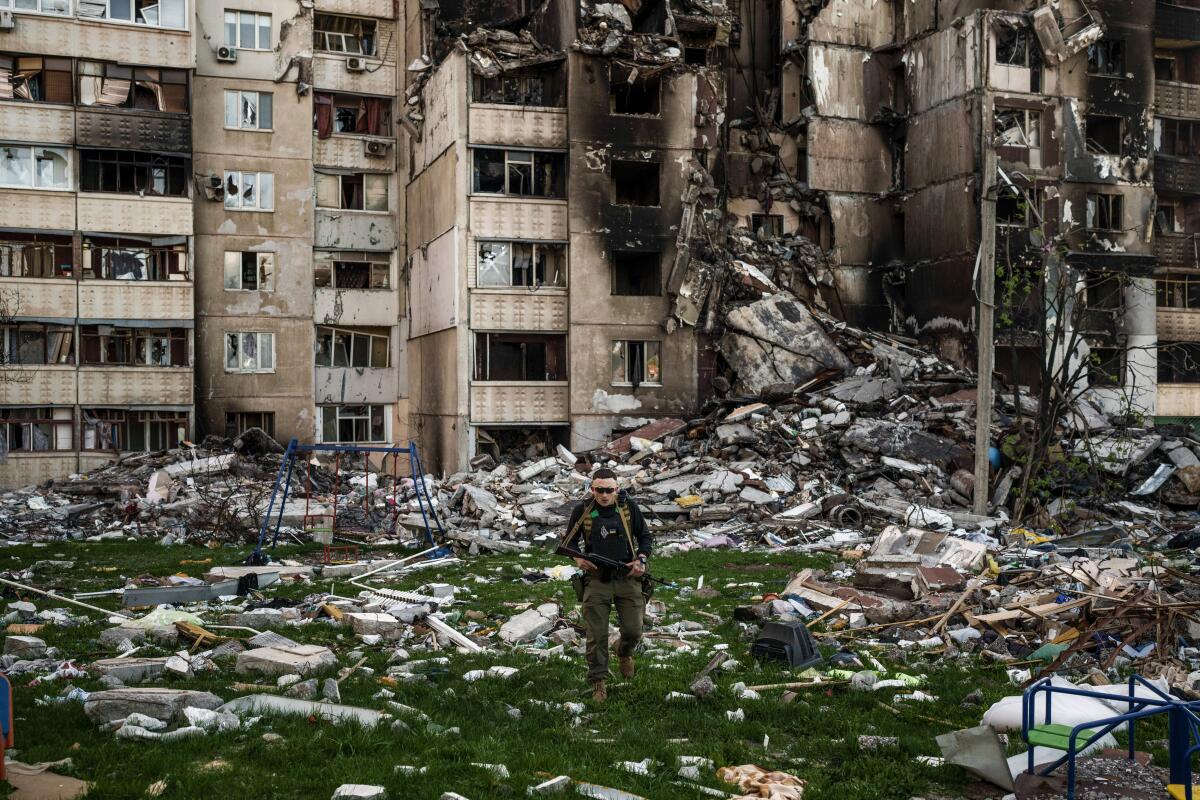
After four years of relentless conflict, Ukraine’s war has transformed far more than its own borders. From the mechanics of modern combat to the foundations of global alliances, the repercussions now stretch across continents.What began as a full-scale invasion has evolved into a protracted struggle that is redefining warfare, diplomacy and the balance of power. For Ukraine, survival has demanded constant reinvention under fire. For Europe, the war has exposed vulnerabilities long obscured by decades of relative peace. For the United States and other global actors, it has prompted a reassessment of commitments once considered unshakeable.On the ground, Ukrainians still…
Read More
How shared river agreements prevent conflict

The Impact of Shared River Agreements on Conflict

Rivers cross political borders more than any modern idea of territory can contain. More than 150 countries share transboundary river basins, and well over 260 international river and lake basins drain across political boundaries. When water is scarce or unevenly distributed, competition can escalate into political tension or even military posturing. Conversely, well-designed shared river agreements act as instruments of cooperation, turning a potential flashpoint into a platform for stable, mutually beneficial management. This article explains how and why these agreements prevent conflict, with examples, data, and practical lessons.Core risks of unmanaged transboundary riversWhen parties draw on a shared river…
Read More