

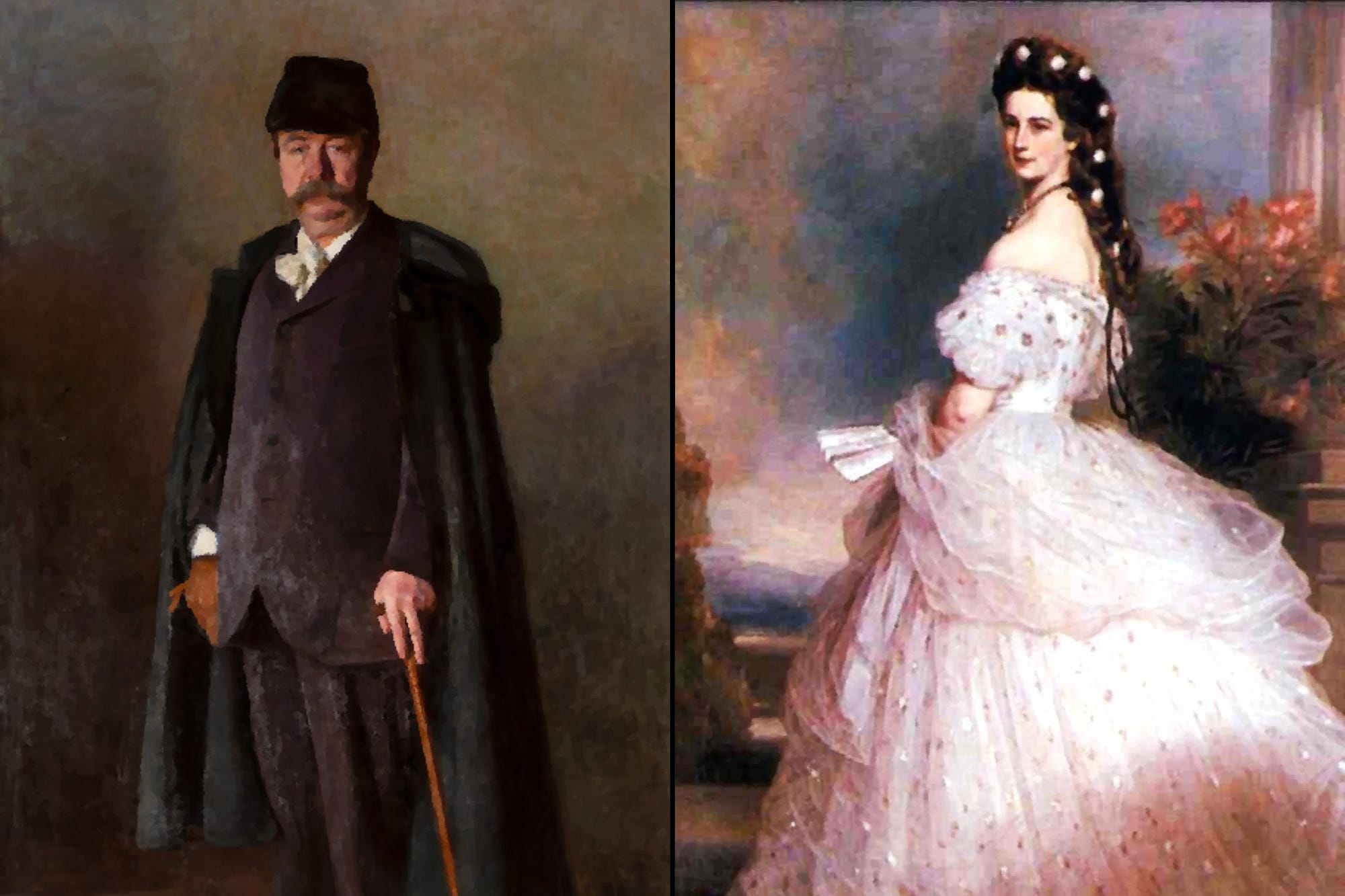

Prior to the era where social platforms revolutionized the fashion industry, before the standard for style was established through magazine covers and runway exhibitions, there existed a woman whose influence and sense of elegance subtly shaped societal perspectives on apparel and womanhood. Marie Vernet, frequently unnoticed in historical accounts, was instrumental in establishing the groundwork for what would later become known as the contemporary idea of the fashion influencer.
Residing in 19th-century France, Vernet emerged as a pivotal personality in a field that was just starting to grasp the importance of visual sway. Even though the word “influencer” wouldn’t be invented until much later, her influence was clear. By the garments she donned and the manner in which she exuded grace, she altered the public’s view of fashion from a mere necessity to a form of cultural expression. Her contribution wasn’t centered on advertisement in a business context—it revolved around presence, refinement, and gentle persuasion.
Vernet’s influence stemmed not only from her appearance but from the unique context in which she emerged. She was closely connected to Charles Frederick Worth, a British designer who is widely regarded as the father of haute couture. Their relationship was both personal and professional—he was her husband, and she became the face of his groundbreaking designs. At a time when fashion was shifting from the anonymous craftsmanship of seamstresses to branded artistry, Worth’s vision of a designer-led house required a public figure who could embody his creations. Vernet was that figure.
Contrary to the models of subsequent decades, Marie Vernet did not strut down catwalks or appear in the spreads of shiny publications. Rather, she operated as a live display, presenting Worth’s creations at Parisian salons and exclusive events. Her contribution was crucial in animating his garments—when she donned a gown, it became coveted not just for its artistry but for the manner in which she embodied it. Customers yearned not merely for the material and tailoring; they desired the sophistication Vernet radiated. Thus, she established an initial model of aspirational fashion.
Here is the revised HTML text following your instructions:
Her rise to fame occurred in a significant context. The 19th century was a time of dramatic change across Europe, affecting politics, society, and culture. Urban landscapes were being transformed by the Industrial Revolution, innovations were modifying communication and manufacturing, and social structures were evolving. Within these shifts, style emerged as a means of self-expression, and creators like Worth leveraged the growing demand for unique clothing. Vernet, with her sophisticated style and innate elegance, was the conduit for these concepts to be conveyed.
Her impact also highlighted a novel connection between women and fashion. Before, attire was often determined by royal regulations or local traditions, but Vernet assisted in shifting fashion towards a more personal and expressive realm. By donning custom-made outfits and being linked with the designer himself, she represented a fresh kind of woman—someone who was both an inspiration and a trendsetter.
In numerous respects, Marie Vernet’s position signified a significant moment in the history of fashion. She merged the boundaries between model and influencer long before these terms were defined in their current form. Her involvement played a part in elevating fashion as a form of representation—where the act of donning was as important as the clothing itself. She wasn’t merely a showcase for Worth’s creations; she was a partner in crafting how the audience perceived and interpreted the idea of couture.
It’s important to highlight that this change took place in an era without cameras or online platforms. Influence spread not via images or social tags, but through prestige, spoken recommendations, and elite events. Vernet’s impact circulated around the salons of Paris, from one noble group to the next. Her likeness wasn’t widely distributed, but it was clearly recalled and talked about—a demonstration of the impact of presence in a non-digital era.
Today, the word “influencer” frequently brings to mind sponsored content and meticulously arranged feeds. However, Vernet’s narrative takes us back to a more basic type of influence: an influence based on genuineness, personal representation, and cultural relevance. She did not initially aim to market a brand. Instead, she turned into the brand by embodying her husband’s vision with elegance and understated strength.
Vernet’s legacy can be seen in how fashion houses operate today. Modern luxury brands continue to rely on individuals who personify their aesthetic—whether celebrities, models, or digital creators. The concept of a muse remains central, even as platforms and technologies evolve. In this lineage, Vernet stands as an origin point, a historical figure who shaped the future without needing to claim the spotlight.
Her narrative prompts consideration of how women’s roles in the fashion industry have transformed. Women have transitioned from merely following trends to playing an active role in creating them—a progression that has been both extensive and intricate. By taking on a unique public presence that combined fashion sense, public image, and understated authority, Vernet played a part in spearheading this change. She provided an example of leadership that was based not on self-advertisement but on working together with others and embodying her principles.
While her name may not appear alongside today’s influencers or style icons, her contribution to the shaping of modern fashion is undeniable. Marie Vernet helped define how clothing could be seen, appreciated, and desired—not just as fabric, but as an extension of personality and identity.
In understanding her role, we also gain insight into how the fashion world began to understand the value of the individual in driving cultural trends. Before billboards, before catwalks and viral campaigns, there was Marie Vernet: quietly stylish, historically pivotal, and undeniably influential.


