

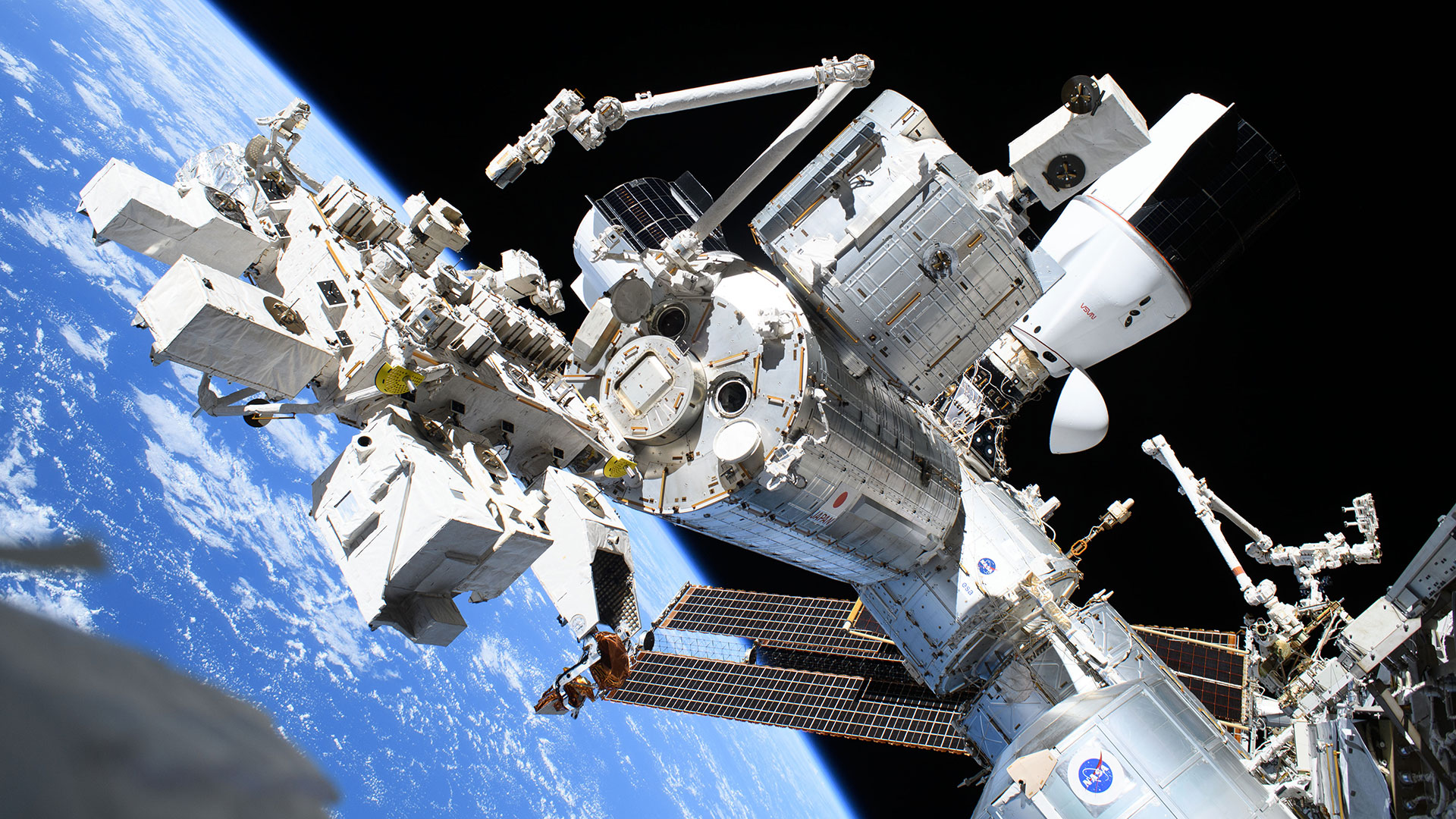

The International Space Station (ISS) stands as one of humanity’s most remarkable feats of engineering and international collaboration. Floating hundreds of kilometers above Earth, this orbital laboratory serves as a symbol of peaceful cooperation between nations once divided by rivalry and political tensions. Yet behind the glossy images of astronauts working in zero gravity lies a story rooted in a pivotal moment—a symbolic handshake in space that helped lay the foundation for the ISS as we know it today.
The concept of a space station shared by multiple countries was once a distant dream, challenged by geopolitical competition, technological hurdles, and budget constraints. During the Cold War, the United States and the Soviet Union pursued separate space agendas, with little collaboration beyond cautious communication. Each nation sought to demonstrate technological superiority through lunar missions, spacewalks, and satellite launches. However, the shifting global landscape in the late 20th century set the stage for a new era of partnership.
By the late 1980s and early 1990s, the Cold War thawed, bringing opportunities for cooperation in space exploration. Both superpowers recognized that pooling resources and expertise could accelerate scientific discovery while reducing costs. It was within this context that the idea of an international space station emerged—a platform not only for research but also as a symbol of unity and shared aspirations.
A defining moment occurred on December 11, 1975, during the Apollo-Soyuz Test Project, when American astronaut Thomas Stafford and Soviet cosmonaut Alexei Leonov met and shook hands in orbit. Though this event predates the ISS by decades, it remains a powerful symbol of collaboration overcoming rivalry. The Apollo-Soyuz mission demonstrated that astronauts from different countries could work together in space, paving the way for more ambitious joint ventures.
This handshake marked the beginning of a gradual process that would eventually culminate in the ISS. Over the following decades, various space agencies—including NASA, Roscosmos (Russia), ESA (Europe), JAXA (Japan), and CSA (Canada)—negotiated agreements to build and operate a shared orbital facility. The ISS program unified elements from earlier projects such as NASA’s Space Station Freedom, Russia’s Mir-2, and Europe’s Columbus laboratory.
The assembly of the ISS itself began in 1998, with the launch of the first module, Zarya, from Russia. This was quickly followed by the American Unity module, linking the station’s components into an integrated structure. The modular design allowed the station to grow over time, with new segments added to support research, habitation, and international cooperation. Each module brought unique technological innovations and reflected the contributions of its home country.
Behind the scenes, extensive diplomacy and technical coordination were required to overcome differences in language, engineering standards, and operational procedures. The handshake in orbit symbolized not just goodwill but a commitment to practical collaboration, trust, and shared responsibility. Space agencies established joint mission control centers, synchronized communication protocols, and developed common safety standards to ensure the station’s smooth functioning.
The ISS now serves as a vital platform for scientific experiments in microgravity, ranging from biological research to materials science. Its unique environment enables studies impossible on Earth, advancing knowledge in fields such as medicine, physics, and environmental science. Beyond research, the station embodies international partnership, with astronauts from multiple countries living and working together for months at a time.
Moreover, the handshake that helped spark this collaboration continues to inspire efforts toward broader space diplomacy. It highlights the potential of space exploration to transcend national boundaries and foster peaceful cooperation, even amid global challenges. The ISS partnership has endured geopolitical shifts, proving that shared goals can unite even the most diverse nations.
The legacy of this historic handshake is visible not only in the station’s orbiting modules but also in the spirit of collaboration that fuels ongoing missions. As space agencies plan for future projects—such as lunar bases, Mars exploration, and commercial space stations—the principles established through the ISS partnership remain guiding beacons.
An orbital handshake signifies more than a mere greeting between astronauts; it marks the pivotal moment that enabled the inception of the International Space Station. Through mutual cooperation, trust, and a unified vision, nations have turned a competitive space race into a joint project that perpetually extends the frontiers of human understanding. The ISS serves as a monument to what humanity can accomplish when it looks past earthly separations and collaborates toward shared objectives.


