

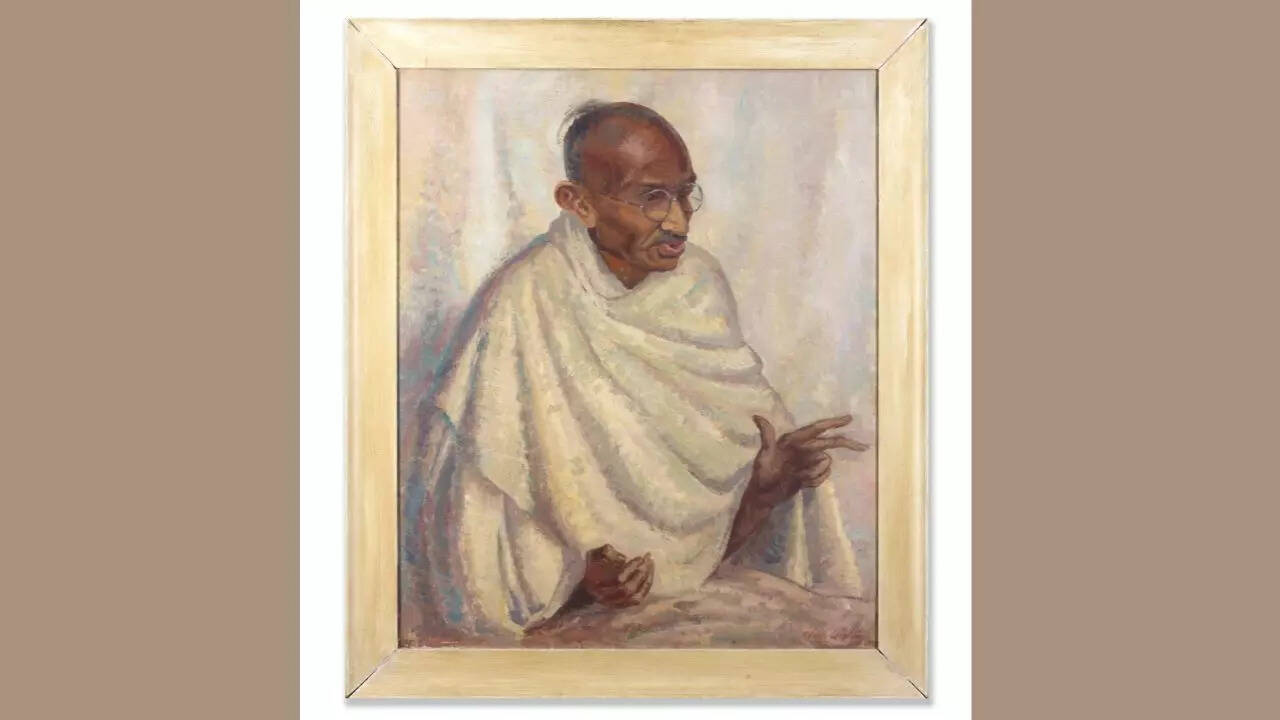

A seldom-seen oil painting of Mahatma Gandhi has garnered international attention after being sold at a recent auction for a figure exceeding $200,000. The artwork, notable both for its subject and its rarity, has become a focal point in the world of historical collectibles, highlighting the enduring fascination with Gandhi’s life, legacy, and visual representation.
The painting, created by an unnamed artist during the mid-20th century, portrays Gandhi in a contemplative pose, capturing both his stoic expression and the quiet intensity for which he is remembered. What makes this piece particularly remarkable is not only its craftsmanship, but the fact that oil portraits of Gandhi are relatively rare in the art market. Most depictions of the Indian independence leader appear in photographs, sketches, or prints, making original painted works highly sought-after by collectors and institutions alike.
According to representatives from the auction house, the portrait exceeded initial estimates by a wide margin. Bidding opened with modest expectations, but interest quickly escalated as private collectors and international buyers recognized the cultural and historical significance of the piece. The final price reflects both the symbolic value of the subject and the scarcity of comparable works in circulation.
Este acuerdo ilumina una tendencia más amplia en el mercado global del arte: la creciente valoración de objetos relacionados con líderes políticos y sociales influyentes. En tiempos recientes, retratos y artículos personales vinculados a figuras como Nelson Mandela, Winston Churchill y Martin Luther King Jr. han experimentado un aumento en la demanda, no solo como obras artísticas sino como conexiones tangibles a momentos cruciales en la historia. Gandhi, cuya filosofía de resistencia pacífica sigue inspirando movimientos alrededor del mundo, sigue siendo un símbolo particularmente poderoso.
Experts in art history indicate that the growing fascination with art centered on Gandhi aligns with worldwide demands for harmony, fairness, and moral guidance. As contemporary communities face political division, social upheaval, and self-reflection, individuals collecting art seem increasingly attracted to personalities that represent values of honesty and empathy. Gandhi’s portrayal, linked to modesty and resilience, strongly resonates with this storyline.
The identity of the buyer has not been made public, though auction officials indicated that the painting is expected to remain in private hands for the time being. Some reports suggest that the new owner is an international collector with a known interest in South Asian history, although this has not been confirmed. Whether the painting will eventually be made available for public viewing through a loan to a museum or gallery remains uncertain.
Experts in South Asian art and heritage have praised the sale as a significant moment for the appreciation of modern Indian history in the Western art world. Although Gandhi is widely recognized globally, high-value sales of artwork depicting him remain uncommon. This auction, therefore, marks a turning point in how the market perceives not just Gandhi’s legacy, but also the artistic representations of that legacy.
Outside the realm of art, this sale has initiated conversations regarding the conservation and location of artifacts of great cultural importance. There are those who have expressed worries about vital historical objects residing in private collections, which may restrict public availability and academic study. These worries have sparked renewed debates over possession rights, cultural legacy, and the part that collectors play in preserving historical narratives.
Nevertheless, the record-setting price demonstrates the powerful resonance Gandhi still holds across borders and generations. His story, rooted in resistance to colonialism and advocacy for civil rights, continues to inspire new interpretations—through books, films, documentaries, and now, increasingly, through fine art. Each medium offers a different lens into his life, allowing for more nuanced conversations about his influence in the 21st century.
The aesthetic elements of the painting also deserve attention. Unlike many formal portraits that emphasize grandeur or stateliness, this particular work presents Gandhi with an understated dignity. The color palette is muted, relying on earthy tones that echo Gandhi’s personal simplicity and his connection to rural India. The background is sparse, directing the viewer’s focus solely on the figure, which enhances the emotional impact of the composition.
Analysts and art experts have observed that the painting refrains from using dramatic elements. There are no obvious symbols or ornamental details—just a strong, serene presence that reflects the values Gandhi represented. This artistic simplicity might be a reason why the artwork attracted buyers. In a time when images are generally bold and designed to catch the eye, the portrait’s understated power provides an uncommon level of emotional richness.
In terms of investment value, this sale may signal a shift in how historical portraits are valued in the broader art market. While modern and contemporary art often dominate headlines, the growing interest in politically and socially meaningful works suggests that buyers are also seeking pieces with narrative and moral weight. Gandhi’s image, rendered with care and respect, offers not only aesthetic appeal but also a deeper connection to ideas that transcend time and geography.
The consequences of this transaction could extend into educational and curatorial realms. Organizations with South Asian collections might scrutinize the portrayal of Gandhi across various media and eras. It might also inspire current artists to reinterpret Gandhi in innovative manners, examining the crossroads between historical admiration and present-day artistic expression.
In the interim, this specific artwork will probably continue to be a topic of discussion among collectors, historians, and enthusiasts of Gandhi’s legacy. Its prominent sale highlights the influence of art not only as a visual medium but also as a carrier of memory, identity, and communal cultural values.
As the art world continues to transform, both emotionally and financially, the triumph of this painting at auction underscores the importance of narratives. When these narratives are reflected in the image of someone as impactful as Mahatma Gandhi, their influence can endure for generations and clearly achieve six-figure sums.


