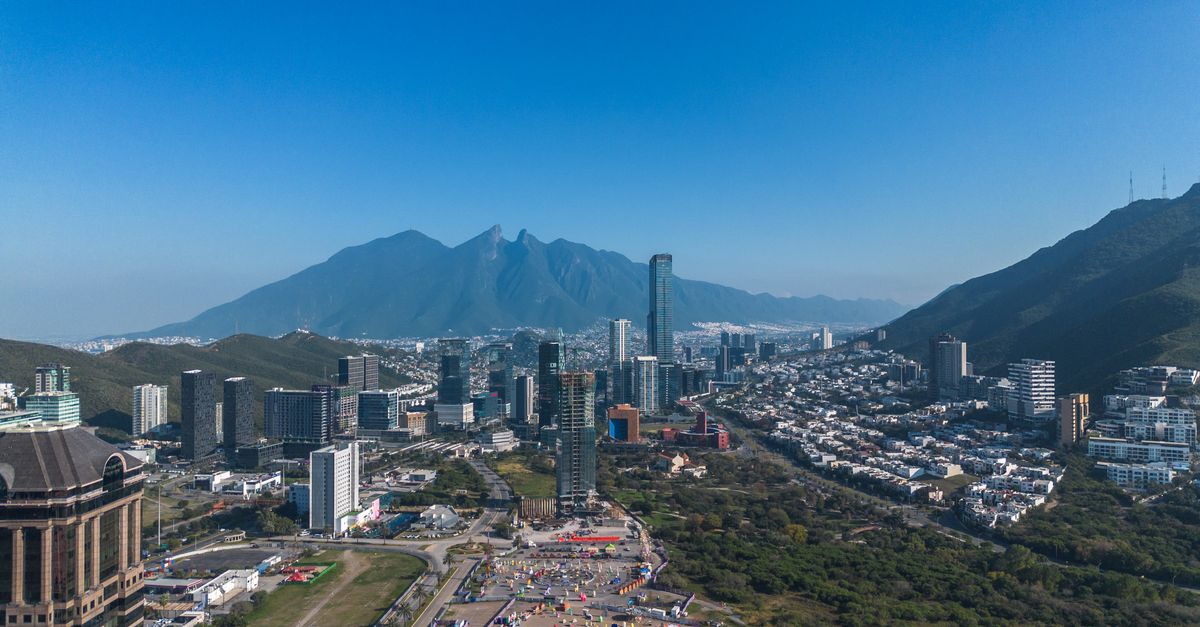

Monterrey, Mexico, stands as a major manufacturing and logistics hub positioned where North American supply routes meet Mexico’s industrial core, and as firms consider nearshoring—relocating production closer to end markets such as the United States and Canada—their choices typically revolve around three interconnected pillars: the strength of the local supplier network, the depth of the talent base, and the reliability of both physical and intangible infrastructure, each of which influences costs, market responsiveness, operational resilience, and long‑term competitiveness, while the Monterrey metropolitan area, with a population of about 5 million and ranking among Mexico’s three leading economic engines, illustrates how these components interact to determine nearshoring success.
Supplier Networks: depth, proximity, and specialization
A concentrated, highly specialized supplier network helps reduce lead times while limiting logistics risks. Monterrey’s industrial clusters provide:
- Automotive and tiered suppliers: An established cluster of Tier 1 and Tier 2 suppliers for engines, transmissions, stampings, and electronics supports global automakers. The presence of recent greenfield automotive investments in the region produced supplier parks and attracted dozens of component suppliers that benefit from geographic proximity.
- Metal fabrication and heavy industry: Centuries of steelmaking and metalworking skills feed equipment, tooling, and heavy components for industrial customers.
- Electronics and medical manufacturing: Contract manufacturers and medical device suppliers with cleanroom and precision-assembly capabilities serve export markets and OEMs.
- Logistics and packaging suppliers: Local logistics providers, packaging manufacturers, and customs specialists reduce friction across cross-border movements.
Nearshoring decisions account for the ability to source inputs regionally to meet USMCA rules of origin and to reduce days-in-transit. Monterrey’s supplier density reduces reliance on long-distance ocean shipments and truncates inventories and safety stock requirements. A practical example: automaker projects in the Monterrey area can recruit many component suppliers within two to three hours’ drive, enabling just-in-time or just-in-sequence models similar to North American plants.
Talent: quantity, quality, and specializations
A strong talent profile extends beyond compensation; it signifies a locality’s capacity to supply skilled workers for advanced manufacturing, R&D, and leadership roles.
- Engineering and technical graduates: Monterrey hosts major universities and technical institutes that graduate thousands of engineers and technicians annually, creating continuous pipelines for manufacturing and product development roles.
- Experienced manufacturing workforce: Decades of heavy industry, automotive, and electronics production mean a workforce versed in precision assembly, quality systems (ISO, IATF), and supplier management.
- Management and bilingual capability: A significant share of professionals are English-capable and familiar with North American business practices, improving collaboration and reducing coordination errors across time zones.
- R&D and innovation: Private-sector R&D centers, university partnerships, and vocational training programs support process improvement, automation adoption, and product innovation.
For nearshoring, talent remains essential even as automation trims staffing needs, since technicians capable of programming, servicing, and fine‑tuning automated systems are in short supply, and Monterrey’s training networks along with its industry‑academia partnerships enable companies to expand advanced manufacturing at speed.
Infrastructure: transportation, energy systems, water resources, and industrial property
Infrastructure assesses whether production can operate dependably and connect with customers and suppliers at a competitive cost.
- Transport links: Monterrey lies within a few hours’ drive of major US border crossings. Road and rail corridors connect to Laredo and other gateway points that handle the majority of Mexico-US overland trade. A major international airport supports cargo flows and executive travel; Monterrey is regularly listed among Mexico’s busiest cargo airports.
- Rail and cross-border integration: New rail network consolidations and private investments have strengthened rail links to Gulf ports and border railheads, reducing dependence on long-haul trucking for bulk and heavy freight.
- Industrial real estate and parks: Abundant Class A industrial parks with turnkey facilities, customs-friendly layouts, and flexible land parcels allow rapid plant deployment and scale-up.
- Energy and utilities: Proximity to natural gas pipelines and investments in private generation enable manufacturers to secure power, though firms must plan for occasional grid constraints and invest in backup or contracted generation where reliability is critical.
- Water and environmental considerations: Water availability and environmental permits are increasingly important. Recent regional stresses have prompted investment in water recycling and infrastructure upgrades; companies need to assess site-level risks and mitigation costs.
Investors choose Monterrey when transport times to US customers, cargo-handling capacity, and ready-to-use industrial space together deliver a clear total-cost and speed advantage compared with distant sourcing.
Regulatory and trade landscape: USMCA and associated incentives
Trade rules and incentives reshape sourcing calculations, as the USMCA’s stricter regional content thresholds for automotive parts increase the value of staying close to North American suppliers and manufacturing ecosystems. Monterrey firms can tap into Mexico’s export programs and customs frameworks to simplify cross-border manufacturing while securing preferential tariff benefits when compliance requirements are fulfilled.
Local and state incentives, public-private workforce initiatives, and municipal support for industrial infrastructure help reduce barriers to setup, while companies should assess regulatory expenses, documentation timelines, and the administrative capability of local jurisdictions during site selection.
Case examples and data-driven tradeoffs
– A mid-size Tier 1 supplier evaluating a shift from Asia to Mexico found that sourcing 60–70% of components from local Monterrey-area suppliers reduced transit time from 30–45 days by ocean freight to 2–3 days by truck or rail to US customers, improving working capital and enabling agile engineering changes. – An automotive OEM that built a new assembly plant in the Monterrey region catalyzed a local supplier park within 12–18 months; multiple Tier 2 suppliers co-located to serve the plant, reducing inbound logistics costs and compressing the supply chain. – Companies with high energy-intensity that contracted private power generation offset reliability concerns and locked in competitive electricity prices, illustrating how infrastructure procurement decisions can change the investment thesis.
From a quantitative perspective, nearshoring to Monterrey often shortens lead times by nearly an order of magnitude compared with Asia-Pacific sourcing, reduces inventory holding days by several weeks, and decreases landed variability that shapes days sales outstanding and service levels.
Risks and mitigation strategies
Shifting operations to Monterrey should not be viewed as a cure-all. Major vulnerabilities range from escalating wages and intensified demand for qualified workers to sporadic utility shortfalls and heightened ecological strain. Ways to address these challenges include:
- Proactive supplier development programs and multi-sourcing within the region to avoid single points of failure.
- Investment in training and apprenticeship programs with local universities and technical institutes to secure long-term talent pipelines.
- Contracts for private energy supply and on-site resiliency measures (backup generation, water reuse systems).
- Supply chain digitization and near-real-time visibility to exploit short lead times while controlling quality and compliance.
Companies that treat these as investment line items, not afterthoughts, capture the full nearshore benefit.
Guidelines for assessing Monterrey when planning a nearshoring initiative
A practical assessment framework:
- Supplier map: Identify local Tier 1/2/3 capacities and gaps relevant to your bill of materials.
- Talent gap analysis: Estimate required hires in engineering, operations, and maintenance and benchmark against local graduate and labor supply.
- Infrastructure test: Validate transport times, customs throughput, energy contracts, and water availability for target locations.
- Total landed cost and working capital model: Include inventory, freight, tariffs, quality rework, and lead-time variability.
- Pilot or phased approach: Use local contract manufacturing or a small greenfield/brownfield expansion to validate assumptions, then scale.
This method lowers decision-making risk and provides clearer insight into the balance among cost, speed, and resilience.
Monterrey’s nearshoring strength becomes clear when its supplier base, workforce capabilities, and infrastructure assets are assessed as a unified system rather than as separate elements. A solid network of local suppliers supports rapid manufacturing cycles; a well-trained talent pool oriented toward upskilling enables sophisticated production and automation; and dependable transportation, energy, and industrial real estate transform strategic advantages into practical execution. Companies that align supplier development, workforce strategy, and infrastructure agreements within a single nearshoring framework can turn Monterrey’s geographic proximity into consistent market agility and long-term competitiveness.