

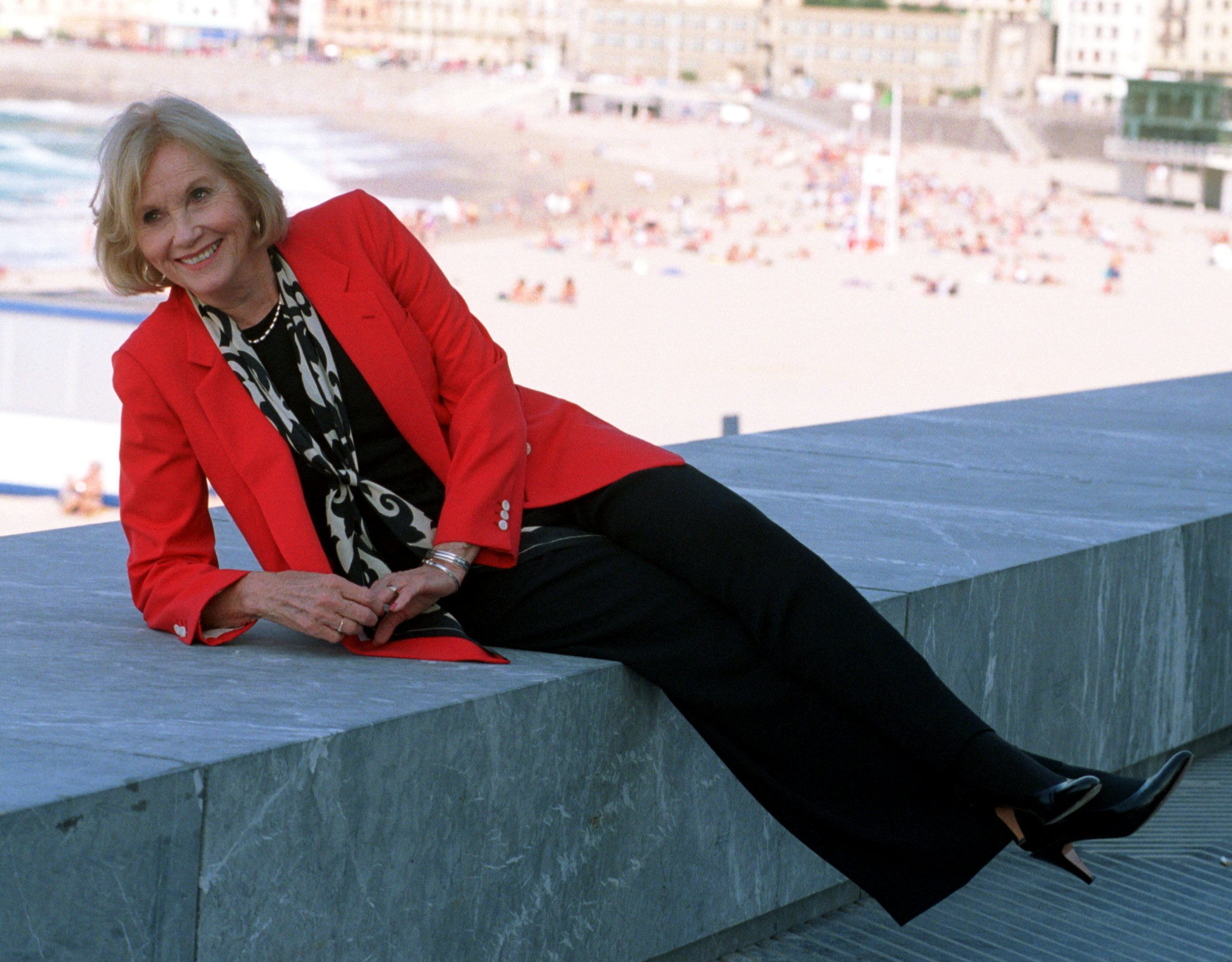

Eva Marie Saint, the Academy Award-winning performer whose unforgettable work alongside Marlon Brando and Cary Grant shaped several of Hollywood’s most iconic motion pictures, has passed away at 102 years of age. Her professional journey encompassed generations of film and television, cementing an enduring legacy within the American entertainment industry.
According to her publicist, Jeff Sanderson, Saint passed away from natural causes on Tuesday at her Los Angeles residence, in the company of relatives and loved ones. Her death brings to a close a truly extraordinary chapter in cinematic history, defined by widely praised roles, partnerships with renowned filmmakers, and a professional trajectory that extended productively well into her advanced age.
An Academy Award-winning premiere that cemented her status
Saint’s ascent to stardom kicked off with her debut cinematic role in On the Waterfront, the 1954 drama helmed by Elia Kazan. Acting alongside Marlon Brando, she offered a portrayal that secured her the Academy Award for Best Supporting Actress. Such recognition marked an exceptional milestone for a fresh face, cementing her status as a rising star within the movie business.
The movie, which explored corruption and the struggles of workers on New York’s waterfront, became one of the defining productions of its era. Saint’s portrayal contributed to the emotional depth of the story, demonstrating her ability to hold her own alongside Brando, whose performance also became a landmark in American cinema.
Saint’s success came at a time when a new approach to acting was gaining influence in Hollywood. She had studied at the Actors Studio in New York, where she encountered the techniques associated with Method acting. Under the guidance of figures such as Kazan and acting coach Lee Strasberg, performers were encouraged to develop psychologically grounded characters and draw on their understanding of human behavior.
Back in 2001, Saint recalled Strasberg’s guidance regarding the treatment of the physical form as an instrument demanding both discipline and attention. This valuable lesson mirrored a performance philosophy prioritizing readiness, flexibility, and a performer’s capacity to align with a director’s creative direction.
Her memorable role in Alfred Hitchcock’s North by Northwest
Although On the Waterfront brought Saint her Academy Award, another film would introduce her to generations of moviegoers. In 1959, she appeared in Alfred Hitchcock’s North by Northwest, playing Eve Kendall, a mysterious woman whose involvement with Cary Grant’s character becomes central to the thriller’s unfolding intrigue.
The movie, celebrated for its thrilling moments and intricate confusions, evolved into one of Hitchcock’s most iconic pieces. Saint imbued Kendall with elegance and ambiguity, portraying a figure whose intentions remain obscure at first glance. Her acting paired seamlessly with Grant’s cinematic charisma, ultimately generating the suspense propelling the plot.
Saint later recalled that Hitchcock approached her performance with a focus on specific physical and vocal details rather than lengthy discussions about emotion. During a 2014 interview, she explained that he instructed her to lower her voice and maintain direct eye contact with Grant during their scenes.
Following those directions, she remarked, proved quite effortless. That brief account revealed much about the filmmaker’s meticulous production techniques and the rapport shared by the two main performers.
The role became one of the most enduring of Saint’s career. While her filmography included a wide range of characters and genres, her performance in North by Northwest secured a lasting place for her in discussions of classic Hollywood cinema.
A professional journey that went far beyond the silver screen
Throughout the 1960s, Saint continued to work in major film productions. Her credits included Exodus, alongside Paul Newman, the romantic drama The Sandpiper and the Cold War comedy The Russians Are Coming! The Russians Are Coming! These projects demonstrated her versatility as she moved between serious dramas, romantic stories and comedy.
Television also became an important part of her professional life. In 1974, she portrayed Edith Wilson in The First Woman President, a production centered on the wife of former U.S. President Woodrow Wilson. Years later, Saint reached another audience through the popular 1980s television series Moonlighting, in which she appeared as the mother of Cybill Shepherd’s character.
Her work in television earned several Emmy Award nominations. She ultimately won an Emmy for her performance in the miniseries People Like Us, adapted from a novel by Dominick Dunne. The recognition underscored her ability to move between film and television while maintaining a consistent presence in both mediums.
Saint’s professional longevity was particularly notable. She continued acting into her 80s and 90s, appearing in productions that introduced her to younger audiences. Among her later film credits were Because of Winn-Dixie, the family film based on Kate DiCamillo’s novel, and Superman Returns, the 2006 superhero feature.
Rather than limiting herself to the roles that had established her fame, Saint continued to take on projects across different genres, extending a career that began during a transformative period in American entertainment.
A lasting partnership away from Hollywood
Saint’s personal life was closely connected to her husband, producer and director Jeffrey Hayden. The couple met on a New York subway and married in 1951, beginning a partnership that lasted 65 years, until Hayden’s death in 2016. They had two children together.
Their bond extended into their careers as well. Early on in their marriage, Hayden directed Saint for an instalment of Omnibus, the CBS television programme recognized for broadcasting diverse cultural and artistic content. Subsequently, the pair collaborated on multiple stage productions and performed together live in Love Letters.
Saint was pregnant when she accepted her Academy Award in 1955, adding a personal milestone to a moment that had already marked a turning point in her professional life.
Despite the demands of an acting career that stretched across decades, she maintained a long family life while continuing to work in film, television and theater. Her partnership with Hayden remained an important part of her story, extending beyond the public attention that accompanied her performances.
Remembering a defining figure in classic American cinema
Eva Marie Saint’s professional trajectory linked multiple generations of directors and actors. Beginning with the grounded drama in On the Waterfront and moving through the sophisticated suspense of North by Northwest, she collaborated with artists whose enduring work helped define the evolution of American cinema.
Her achievements were not confined to a single celebrated performance. The Academy Award, her Emmy-winning television work and her continued appearances in later life reflected a professional range that crossed formats and decades.
Saint also exemplified an era of artists who evolved alongside shifting performance techniques and transforming entertainment sectors. Her education at the Actors Studio, partnerships with prominent filmmakers, and dedication to sustained professional longevity shaped a portfolio that endures as a pillar of Hollywood’s cinematic heritage.
Her passing at age 102 brings down the curtain on a remarkable existence that spanned over seventy years of cinematic contributions. Across her various roles, Saint bequeaths a legacy of creative excellence that keeps viewers linked to several of the most impactful motion pictures of the twentieth century.


