

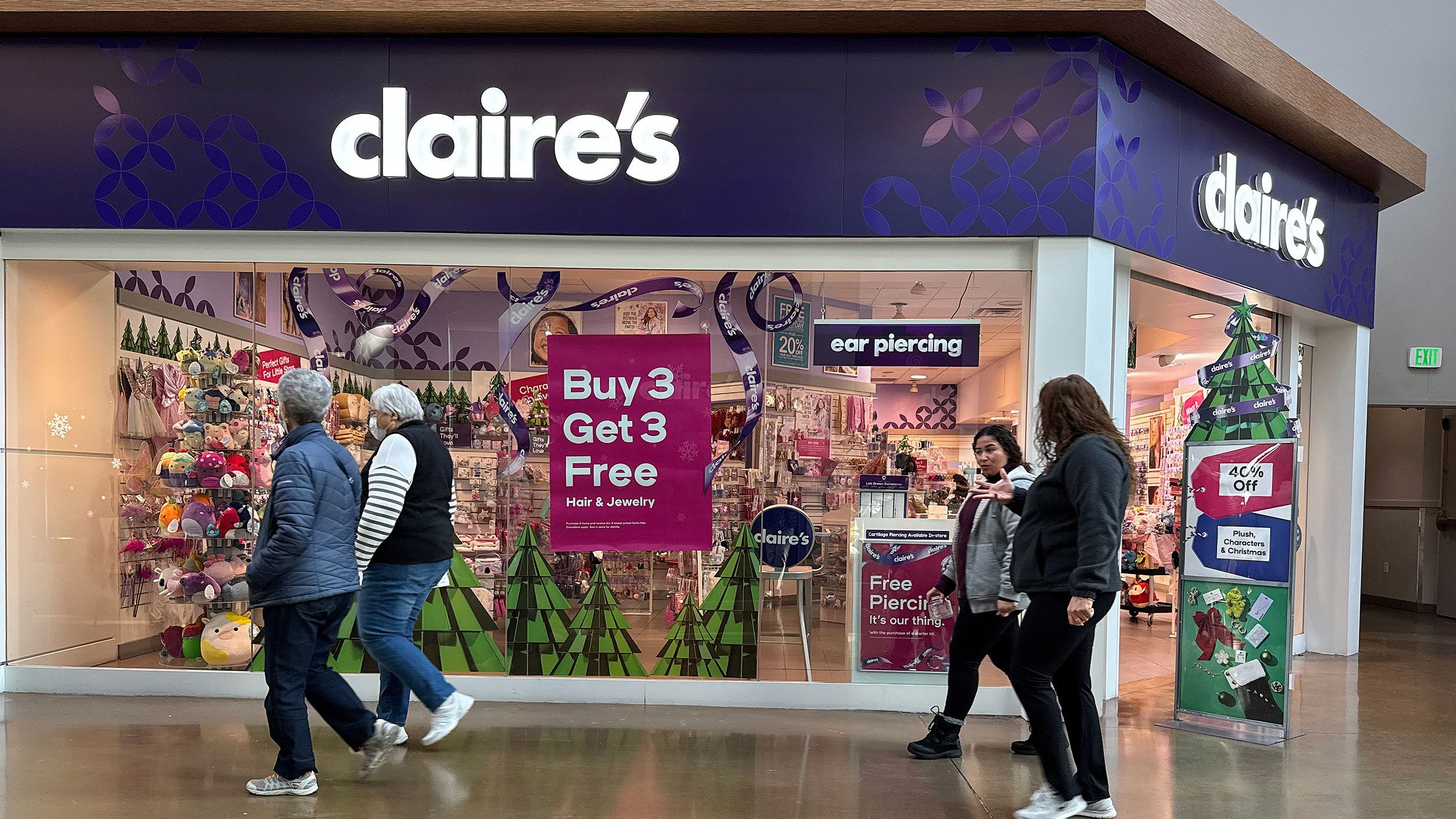

The well-known jewelry and accessories brand Claire’s has started bankruptcy procedures, signifying the retailer’s second Chapter 11 filing, which has been a staple for generations of youthful customers. This situation highlights the persistent difficulties confronting traditional retail businesses in a market that is becoming increasingly digital, especially those serving a younger audience with changing shopping habits.
Founded in 1961, Claire’s evolved into a cultural icon for young adolescents and teenagers looking for cost-effective fashion accessories, ear piercings, and stylish jewelry. The business’s ongoing financial overhaul comes after its earlier bankruptcy in 2018, indicating continued challenges in adjusting to the swift evolution of retail. Market experts highlight multiple reasons for the retailer’s troubles, such as decreasing foot traffic in malls, rivalry with digital vendors, and shifting purchasing habits among Generation Z consumers.
Retail analysts observe that Claire’s circumstances illustrate the wider challenges faced by specialty retailers that used to prosper in mall settings. While the brand once gained from spontaneous buys during family trips to malls, today’s young people more often find and buy accessories using social media and online marketplaces. This change has compelled the company to significantly enhance its online shopping abilities while keeping its vast array of physical outlets.
The bankruptcy case is happening as talks with creditors are reportedly underway to address the company’s significant debt burden. Financial restructuring papers show intentions to keep stores open while the reorganization is underway, aiming to become a more financially viable company. Claire’s management has stressed their dedication to preserving regular operations during the legal proceedings, such as accepting gift cards and maintaining customer loyalty schemes.
Market researchers highlight the particular challenges facing retailers targeting tween and teen demographics. Today’s young consumers demonstrate markedly different shopping behaviors than previous generations, showing greater price sensitivity, stronger environmental and ethical consciousness, and preference for digital-native brands. These trends have forced traditional youth retailers to reconsider everything from product sourcing to marketing strategies.
Despite these challenges, Claire’s retains significant brand recognition and maintains a presence in approximately 2,400 locations across North America and Europe. The company’s ear piercing service, long a rite of passage for many young Americans, continues to drive foot traffic even as other aspects of the business struggle. Analysts suggest this service differentiator could become increasingly important to the brand’s value proposition moving forward.
The market for accessories aimed at young people has become more challenging over the past few years. Major fast fashion brands, online niche stores, and social media commerce platforms now provide similar products at competitive prices, often using more efficient digital promotion methods. This situation has put pressure on conventional businesses like Claire’s that originally thrived through physical retail outlets.
Industry analysts will closely monitor how the company’s restructuring plan tackles these core market changes. Possible approaches might involve optimizing store locations, improving online experiences, or collaborating with social media influencers to engage with younger demographics. The bankruptcy proceedings might offer the financial leeway required to execute these changes.
Claire’s situation also reflects broader trends in private equity-owned retail businesses. The company’s current financial structure stems from its 2007 leveraged buyout, a transaction that left it with significant debt just before the retail industry began its digital transformation. Similar patterns have played out with other once-dominant retailers, raising questions about the long-term viability of highly leveraged ownership models in volatile consumer sectors.
For mall managers, Claire’s troubles introduce a new difficulty in preserving lively tenant combinations that draw in customers. This chain has traditionally been seen as a key component for the youth-focused sections of malls, and its possible reduction could lead to further empty spaces in establishments already dealing with decreased customer flow. A number of commercial property specialists indicate this could speed up the shift of mall areas into mixed-use projects.
As the bankruptcy proceedings advance, the case will test whether a heritage teen brand can successfully reinvent itself for the digital age. Claire’s executives have indicated their belief in the brand’s enduring relevance, pointing to its strong recognition among parents who themselves shopped at the stores as children. However, the company must now prove it can translate this nostalgia into sustainable business performance.
The outcome may offer lessons for other traditional retailers navigating the transition to omnichannel commerce. Success will likely require balancing physical retail’s experiential advantages with e-commerce’s convenience and personalization capabilities – a challenge many established brands continue to grapple with in the post-pandemic retail environment.
For now, Claire’s joins the growing list of iconic retail names forced to reorganize in response to seismic industry changes. Whether this second bankruptcy marks another step in the brand’s evolution or signals more fundamental challenges remains to be seen as the company works through its financial restructuring in the coming months.


